
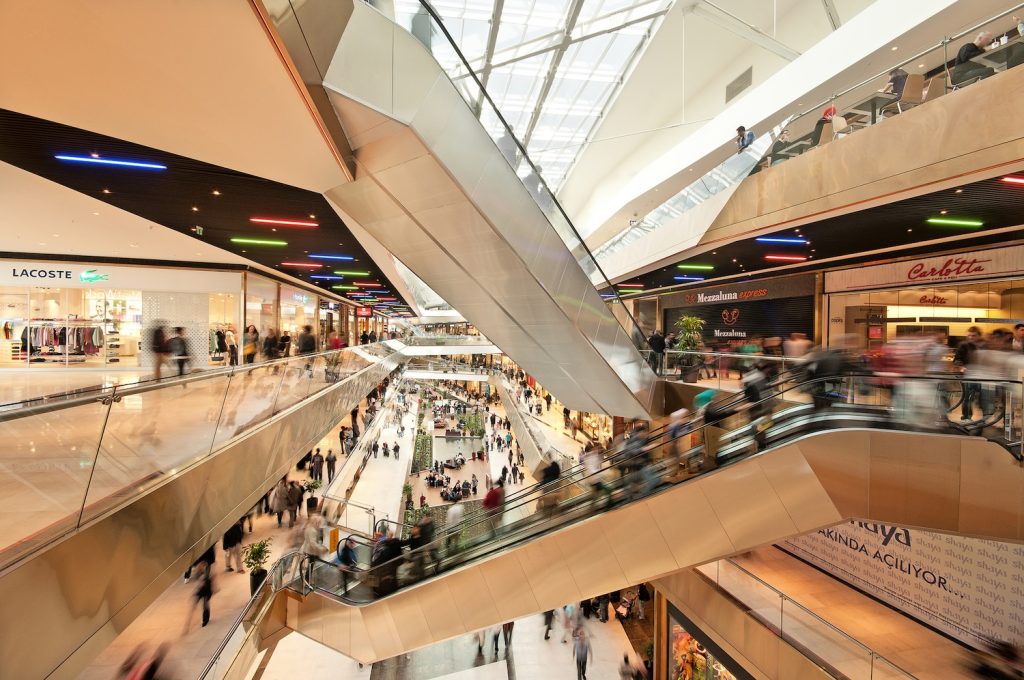
Shopping centres can no longer rely on retail alone to attract visitors. Changing consumer habits are pushing owners, developers and property managers to create more flexible, convenient and community-focused destinations.
Beyond the Traditional Shopping Model
More shops do not necessarily mean better business performance. As reported by PropertyNews.pl, industry experts at Property Forum 2026 discussed how shopping centres must evolve to meet changing customer expectations, with dining, entertainment, services and social spaces becoming increasingly important.
For shopping centre operators, understanding local communities is now central to successful property management. Monika Pyszkowska, Managing Director at ECE, explained that each city and district has different needs. A shopping centre in a city centre cannot necessarily follow the same model as one on the outskirts.
Adapting the tenant mix is an ongoing process rather than an overnight transformation. Existing leases and the lifecycle of each property influence how quickly changes can be introduced.
Flexibility Is Essential for Long-Term Success
Shopping centres must be designed to accommodate uses that may not even be anticipated today. Dorota Suchodolska, Business Development Director at Nhood Poland, highlighted the difficulty of predicting customer expectations 15 to 20 years ahead.
This makes adaptable layouts particularly important. Retail spaces may eventually need to accommodate restaurants, medical services, coworking facilities or entertainment venues as lifestyles and leisure habits evolve.
The pandemic also reshaped expectations. Convenience and accessibility became decisive factors in where people chose to shop, with easily accessible retail destinations gaining importance. Those habits continue to influence shopping centre development.
Technology Supports Smarter Expansion
Retailers face similar challenges when planning their store networks. Przemysław Kozioł, Retail Sales Director at Sinsay/LPP, explained that opening more stores is not automatically the right strategy, particularly when new locations may affect the performance of existing ones.
With Sinsay accounting for approximately two-thirds of LPP Group’s stores, expansion requires careful analysis. Technology and data help assess opportunities, but commercial experience remains essential.
Digital channels are also reshaping the relationship between retailers and physical stores. More than 80% of Sinsay’s online sales come through its app, demonstrating how customers increasingly begin their shopping journey digitally before deciding whether to visit a store.
From Shopping Destinations to Community Spaces
Shopping centres are increasingly becoming places where people meet, spend time and access everyday services. According to Pyszkowska, ECE is working to create more reasons for customers to visit beyond making purchases.
Coworking spaces, healthcare services, entertainment and community activities are all contributing to this shift. The emphasis is moving towards destinations that reflect the everyday needs of the people living nearby.
However, market conditions differ across Central Europe. Poland offers a large, geographically diverse retail market where brands frequently test new concepts. The Czech Republic benefits from stronger consumer optimism, while Hungary faces weaker sentiment and a retail market concentrated largely in Budapest.
A New Approach to Retail Property Management
The future of shopping centres depends on continuous adaptation rather than a fixed formula. The discussion at Property Forum 2026 highlighted the importance of flexible buildings, locally relevant tenant mixes and informed expansion decisions.