
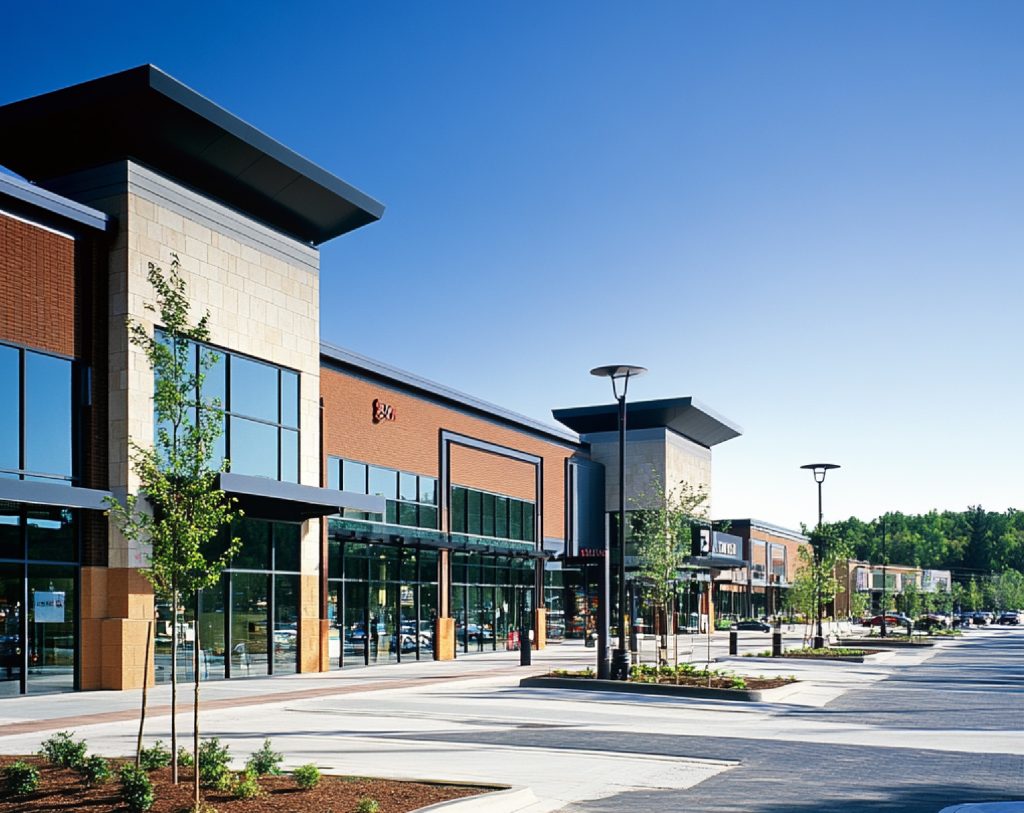
Poland’s retail parks are moving beyond quick shopping trips and becoming places where people combine shopping, exercise, services and family activities. The shift is particularly visible in smaller towns, where retail parks are taking on a broader role in everyday local life.
Convenience Keeps Customers Coming Back
Frequent visits give retail parks a strong base for expanding their tenant and service mix. Research from Cushman & Wakefield Poland found that 76% of people under 40 visit a retail park at least once a week for shopping, compared with 59% of those over 40. In towns with fewer than 50,000 residents, 36% of respondents visit weekly, against 24% in Warsaw. Convenience and proximity remain at the heart of the format’s appeal.
For property and facility managers, a broader mix of uses changes how a retail park needs to work. Fitness clubs and children’s play facilities are becoming more common, giving customers reasons to visit regularly rather than simply arriving, completing a purchase and leaving. That can mean different patterns of footfall and greater attention to cleaning, security, parking, shared areas and operating hours.
EurobuildCEE, drawing on Cushman & Wakefield Poland research, describes retail parks as increasingly becoming local hubs for everyday needs. The trend points towards properties that support several activities during a single visit rather than functioning purely as collections of shops.
Foodservice Still Has Room to Grow
Restaurants and cafés could benefit as retail parks encourage customers to stay for longer. The number of foodservice outlets in retail parks across Poland’s eight largest cities has doubled over the past decade, although only 17% of surveyed customers currently choose retail parks when eating out. Short visits and the absence of traditional food courts remain barriers to further growth.
Leisure facilities could help change that by increasing dwell time and supporting more food and beverage operators. For managers, a larger foodservice component would also bring practical requirements around waste, deliveries, ventilation, utilities, cleaning and maintenance — issues that become more significant as a property develops beyond straightforward retail use.
Smaller Towns Offer a Different Model
The local-hub model may have its strongest potential outside Poland’s major cities. Consumers in smaller towns are often prepared to travel 15–20 minutes for shopping or exercise, while customers in Warsaw tend to expect services much closer to home.
That makes retail parks increasingly part of the everyday infrastructure of smaller communities. For owners and property managers, the challenge is no longer simply to provide convenient retail space, but to operate places that can handle a wider range of tenants, activities and customer needs throughout the week.