
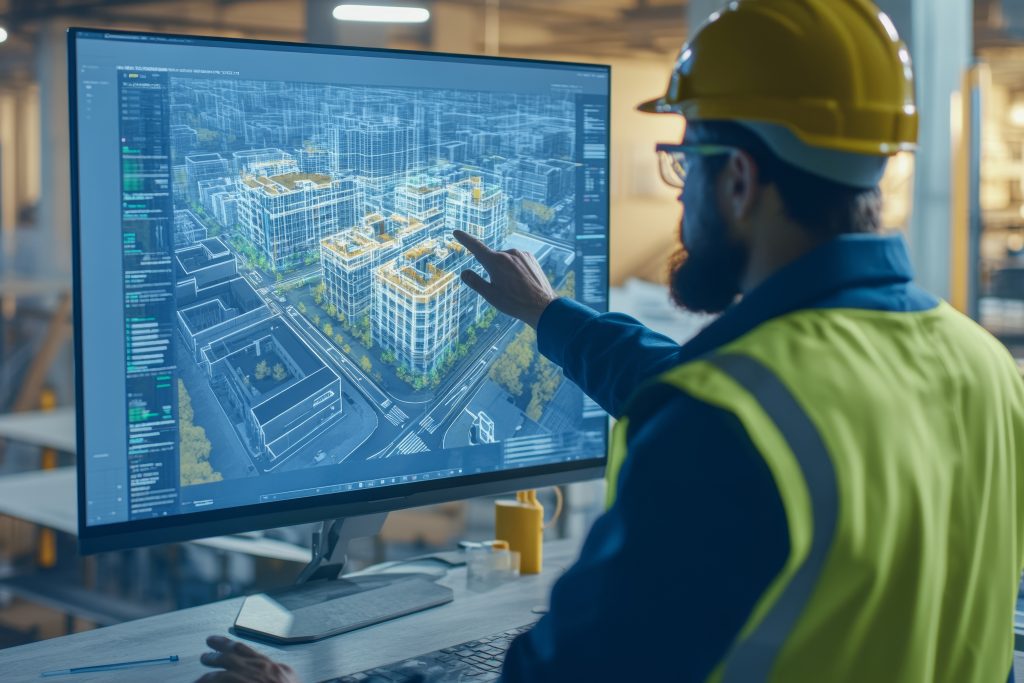
FM newsroom – facility management. Digital twins are rapidly becoming a cornerstone of smarter buildings, yet many still struggle to move beyond visually impressive models. The real value emerges when artificial intelligence turns raw data into actionable insight.
Digital twins and artificial intelligence are rapidly reshaping building operations, but their real value lies beyond eye-catching visuals. As industry expert Amir Frayhat explains for BIM World, the future of facility management depends on turning data into meaningful action.
From Data to Decisions
As Amir Frayhat, Director at HSD Händschke Software & Datentechnik GmbH, explained, digital twins are only as useful as the intelligence applied to them. While these virtual models gather enormous volumes of building data, artificial intelligence is what transforms that information into practical outcomes.
Rather than simply presenting visually appealing 3D representations, AI enables pattern recognition, identifies anomalies, and simulates scenarios. This allows facility managers to move from passive observation to informed decision-making, whether that involves planning maintenance or refining operational processes.
The Data Quality Challenge
However, the effectiveness of AI depends heavily on the reliability of the data it receives. Faulty or incomplete sensor inputs can compromise outcomes, and while AI can flag inconsistencies through plausibility checks and historical comparisons, it cannot catch every error.
Frayhat highlights the continued importance of human oversight. Regular sensor calibration and manual spot checks remain essential to ensure that digital twins reflect reality accurately, reinforcing that technology alone cannot guarantee precision.
A Hybrid Future for Building Management
Looking ahead, fully autonomous building control remains unlikely in the near term. Instead, a hybrid approach is expected to dominate. AI will increasingly handle routine operational tasks such as heating, ventilation control, and maintenance scheduling.
At the same time, human expertise will remain indispensable. Facility managers will set parameters, oversee systems, and step in when complex or nuanced decisions are required. This balance between automation and human judgement is set to define the next generation of intelligent building management.