
Robots and predictive tech are old news – but the real shift is happening in the everyday services that keep offices, sites and workplaces running smoothly. Cleaning, catering, security and reception are quietly being rewritten by data and AI.
The End Of The Fixed Schedule
Cleaning, security, catering, logistics, reception, access control – so-called soft facility management has always run on rotas, attendance sheets and human oversight. That’s starting to shift. Instead of cleaning a space because the contract says so, sensors, occupancy data and vision systems are beginning to decide where attention is actually needed, and when.
It’s not mainstream yet, but the trajectory is unmistakable.
Predicting Demand, Not Just Meeting It
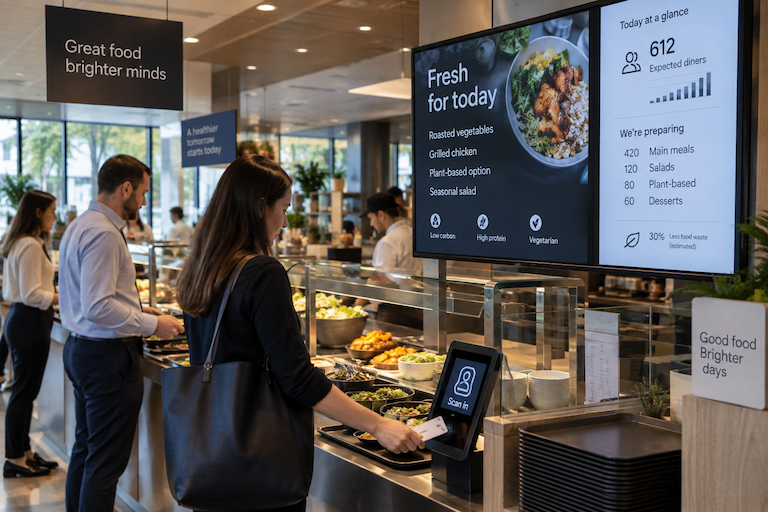
Facility managers are having to hold a tricky balance between stronger predictive capability on one hand, and privacy, cybersecurity and accountability on the other – not to mention knowing when a human still needs to be in the room. Even staff catering is turning predictive, with attendance patterns, shift data and bookings helping kitchens cut waste and fine-tune what’s on offer.
This is part of why integrated facility management (IFM) is gaining ground across Europe, as reported by FacilityNews: large organisations increasingly want catering, cleaning and security coordinated under one roof rather than juggled across a dozen suppliers.
From Facility Manager To Workplace Experience Wanager
So how do you square high-tech ambition with the realities of the field? IFMA has started talking about a shift from facility manager to workplace experience manager – a role less about managing square footage and more about hospitality, service impact and outcomes. Data literacy, AI fluency and communication skills now sit alongside the traditional planning toolkit.
The real insight from the IFMA Executive Summit 2026, though, is that AI adoption is less a tech problem than an organisational maturity one. Nobody’s talking about replacing people with algorithms – the point is moving from fixed schedules to services that flex with real conditions: cleaning when it’s actually needed, restocking ahead of demand, managing risk rather than just checking badges.
Buying Results, Not Frequency
Less time spent ticking off routine checks, in other words, and more spent handling exceptions, safeguarding quality and looking after people’s wellbeing. For decades the cost of cleaning, catering or security has been measured in purely financial terms, with almost no attention paid to the value they actually deliver. The move towards “workplace experience” starts to link those services to space usage, satisfaction, productivity and business continuity instead.
That’s a genuine change in what gets measured – and it won’t work unless clients evolve too. Writing a spec that demands a certain frequency is the old habit; buying measurable results is the new one. The real leap in maturity, in the end, has to happen on both sides of the contract.